

The Joy, Drama, and Tiny Electrical Gremlins of Owning a 1975 Classic Mini
There are many sensible ways to commute to work.
A modern car, for example, will usually start when asked. It will have cup holders, Bluetooth, airbags, heated mirrors, and probably some sort of dashboard light that politely explains what has gone wrong before anything truly dramatic happens.
A 1975 Classic Mini, on the other hand, prefers a more theatrical relationship.
It does not so much “provide transport” as offer a rolling partnership in hope, noise, petrol fumes, charming uncertainty, and occasional roadside diagnostics. You do not simply own a car like this. You negotiate with it. You learn its moods. You listen to its little coughs and clicks. You celebrate every successful start as if you have just won a stage of the Monte Carlo Rally.
This week, the Mini decided it was time for another lesson.
The lesson was called: starter solenoid.
The Moment the Mini Said “No”
There is a very particular feeling when an old car refuses to start. It is not quite panic. It is not quite surprise. It is more like a resigned little sigh from somewhere deep in the soul.
You turn the key, expecting the familiar chatter, whirr, and hopeful mechanical scramble of a classic engine waking up. Instead, the Mini responds with the automotive equivalent of folding its arms and looking away.
Nothing useful happens.
At that point, the mind begins its checklist.
Battery?
Starter motor?
Bad earth?
Ignition switch?
Ancient British electrical sorcery?
And then, sitting there in the engine bay like a tiny gatekeeper to all forward progress, is the starter solenoid.
Farewell, Old Solenoid
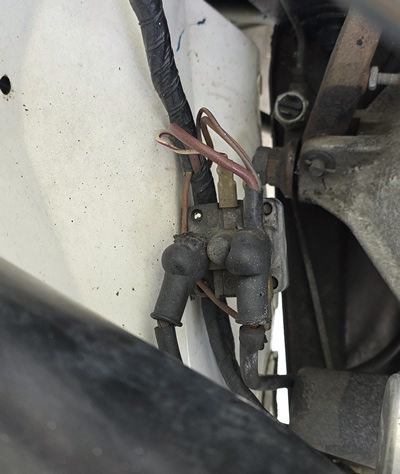
The old part had clearly done its time. The old solenoid deserves to be viewed with the respect due to a retired veteran. It may have spent years quietly doing its job, sending power where power needed to go, receiving no thanks, no praise, and probably very little cleaning.
Then one day, it simply decided it had had enough.
And honestly, fair enough. The car was made in 1975. Every component has either been replaced, rebuilt, repaired, sworn at, or is quietly waiting for its turn.
That is the thing about owning a car from the mid-seventies. It does not break in a way that feels like failure. It breaks in a way that feels like conversation.
“Remember me?” says the solenoid.
“Yes,” you reply, reaching for the tools.
“I am important.”
“Yes,” you say, now slightly more respectfully.
“And now I am finished.”
A Trip to Classic Mini Spares
Fortunately, the Classic Mini world is full of good people, useful parts, and tiny acts of salvation.
A replacement starter solenoid was sourced from Classic Mini Spares in Te Puke, courtesy of Scott, for the very reasonable sum of $50.
There is something deeply satisfying about buying a physical part for an old car. No software update. No diagnostic subscription. No sealed plastic module that requires a laptop, dealer access, and three passwords.
Just a solenoid.
A small box of electrical promise.
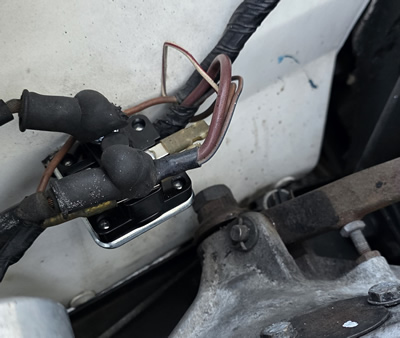
The new solenoid marks the arrival of hope. Shiny, purposeful, and ready to restore the Mini’s faith in itself, the new solenoid had one job: take the drama out of starting the car.
Well, some of the drama.
This is still a 1975 Mini, after all.
The Glorious Return of “Vroom”
Then came the moment of truth......
The key turns.
There is that split second where every classic-car owner holds their breath.
Then it happens.
The engine catches.
Suddenly, all is forgiven. The awkward diagnosis, the fiddling, the dirty hands, the worry that maybe it was not the solenoid after all — gone in an instant. The Mini is alive again, buzzing and vibrating with that unmistakable small-car confidence that says, “Of course I was going to start. Why were you worried?”
That is the emotional trap of old cars. They can frustrate you completely, then redeem themselves with one enthusiastic burst of engine noise.
A modern car starts and you think nothing of it.
A Classic Mini starts and you feel like applauding.
The Commute That Makes It All Worth It
And then there is ..
Because once the repair is done, once the tools are packed away, once the old solenoid has been demoted to “interesting garage object,” the Mini returns to what it does best: making ordinary journeys feel special.
Driving to work should not feel like an event, but in a 1975 Mini it does. You sit low. The road feels close. The steering talks. The engine thrums away with cheerful determination. Every corner is a little invitation. Every roundabout is a tiny celebration. Every stretch of road feels more alive than it has any right to be.
You are not sealed away from the experience. You are part of it.
There is no excess, no insulation from the world, no digital filter placed between you and the drive. Just hands, pedals, wheel, engine, road, and that wonderful sensation that the whole car is somehow wrapped around you like a noisy little go-kart with number plates.
The Ups, the Downs, and the Reason We Keep Coming Back
Owning a car made in 1975 is not always convenient.
Sometimes it fails to start.
Sometimes a $50 part becomes the most important object in your week.
Sometimes you find yourself learning more about electrical circuits than you ever intended.
But it also gives back in ways modern cars often forget to.
It turns maintenance into achievement. It turns replacement parts into stories. It turns a commute into a memory. It turns a small mechanical victory into a full-body feeling of triumph.
The failed solenoid was annoying, yes. But it also became part of the car’s ongoing story. Another chapter. Another little battle won. Another reminder that this Mini is not just transport — it is a companion with a personality, a history, and an occasionally mischievous sense of timing.
And when it is fixed, when it starts cleanly, when you pull out onto the road and feel that tiny 1975 machine come alive beneath you, everything changes.
The frustration disappears.
The worries fade.
The world gets a little brighter, the road gets a little better, and the commute becomes something you actually look forward to.
Because in that moment, driving the Mini is not just practical. It is not just nostalgic. It is not just fun.
It is absolutely blissful.
Pure pleasure.
A tiny, noisy, perfectly imperfect slice of motoring happiness.

0 Comments